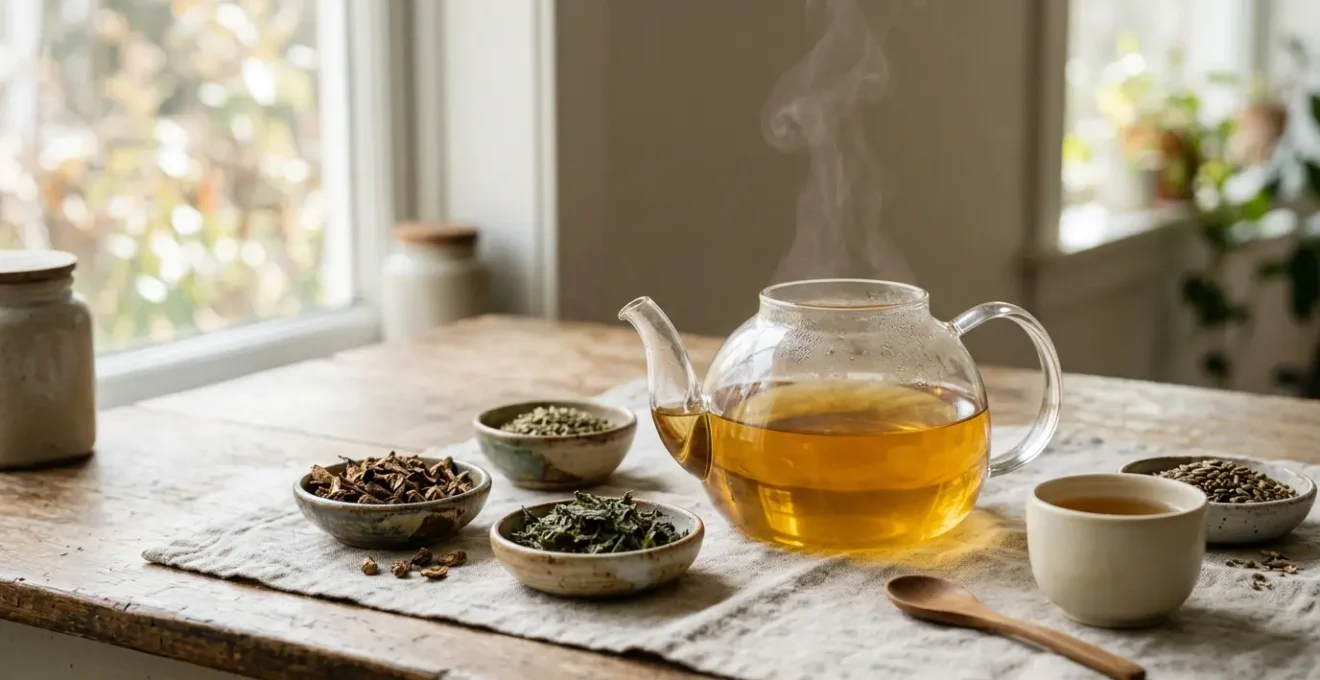
True liver support isn’t about aggressive ‘detoxes’ but about creating a synergistic daily ritual that gently enhances all of the body’s elimination pathways.
- The effectiveness of an herb depends entirely on the correct brewing method—infusing a root is often a waste of its medicinal properties.
- Gentle diuretic teas must be cycled, and supporting the lymphatic system through movement is as crucial as the tea you drink.
Recommendation: Shift your focus from a single ‘miracle herb’ to a holistic system of therapeutic hydration, mindful movement, and pure sourcing to achieve sustainable wellness.
Many of us feel the pull towards a “reset,” a desire to support our body’s natural cleansing processes, especially the liver. The market responds with a dizzying array of expensive juice cleanses and dramatic “detox” promises that often feel aggressive and unsustainable. We’re told to drink specific teas, but the advice is often generic, overlooking the nuances that transform a simple cup of tea into a genuinely therapeutic ritual. The common approach focuses on a single organ, forgetting that the body is an interconnected system.
But what if the key to effective, gentle, daily support wasn’t found in a drastic purge but in the subtle art of a well-crafted tonic? What if the secret lies not just in *what* herbs you use, but in *how* you prepare them, *when* you drink them, and how you support the body’s other vital elimination pathways, like the kidneys and lymphatic system? This approach moves beyond the simplistic “detox” narrative and into the realm of true systemic wellness, where every sip is part of a larger, more harmonious strategy for health.
This guide offers a practitioner’s perspective on building a safe and effective daily ritual for liver support. We will explore the crucial differences between key herbs, the non-negotiable techniques for proper medicinal extraction, and how to integrate these practices with other pillars of health like movement and hydration for a truly holistic approach.
Summary: A Guide to Gentle and Effective Liver Support Teas
- Why Dandelion root is superior to milk thistle for kidney flushing?
- How to brew medicinal tea correctly to extract therapeutic compounds?
- Diuretic teas vs Hydrating teas: knowing when to stop drinking nettle
- The pesticide risk: why sourcing organic tea is critical for detox
- Sleep teas: blending valerian and chamomile for varying levels of insomnia
- Rebounding or Walking: which pumps lymph fluid more efficiently?
- The detox pathway error: sweating without hydration rebalancing
- How to Reduce Chronic Fluid Retention in Legs Without Diuretics?
Why Dandelion Root Is Superior to Milk Thistle for Kidney Flushing?
In the world of liver herbs, milk thistle often steals the spotlight for its protective qualities. However, when the goal is to support the body’s natural flushing mechanisms, dandelion root offers a unique and often superior advantage. While milk thistle focuses on protecting liver cells (hepatoprotection), dandelion root works on a different, yet complementary, part of the system. Its primary strength lies in its function as a potent, yet gentle, diuretic that supports the kidneys—a key elimination pathway.
This isn’t just any diuretic action. Unlike many pharmaceutical diuretics that can deplete the body of essential minerals, dandelion root promotes kidney elimination without depleting essential potassium. This makes it a much safer and more balanced choice for gentle, daily support. It effectively increases urination, helping to flush out metabolic waste that the liver has processed, thus reducing the overall burden on the system.
Therefore, the choice between them isn’t about one being “better” overall, but about understanding their specific roles. For long-term cellular protection, especially if you have known liver stress, milk thistle is invaluable. But for short-term support to reduce bloating, encourage bile flow, and enhance the flushing action of the kidneys, dandelion root is the more direct and effective tool. For comprehensive support, they can be used synergistically: dandelion stimulates flow while milk thistle protects the structure.
How to Brew Medicinal Tea Correctly to Extract Therapeutic Compounds?
Choosing the right herb is only half the battle; how you prepare it determines whether you receive its full medicinal benefit or just a cup of lightly flavored water. The cellular structure of different plant parts—delicate leaves versus tough, woody roots—requires vastly different methods to unlock their therapeutic compounds. This is the art of therapeutic extraction, a foundational principle in herbal medicine.
For delicate leaves, flowers, and aerial parts like chamomile or nettle, a simple infusion (steeping) is best. This preserves their volatile oils. For tough roots and barks like dandelion root, a longer simmering process called decoction is non-negotiable. Merely steeping a dense root in hot water will fail to extract the deep-seated minerals and compounds that hold its power.
As the image above illustrates, a proper decoction visibly draws the beneficial compounds out of the dense plant material into the water. This process requires time and gentle heat. To further enhance your brew, always use a lid to trap escaping steam, which carries precious volatile oils. Furthermore, starting with filtered or spring water provides a cleaner solvent, as the chlorine in tap water can degrade the very polyphenols you’re trying to extract.
| Method | Plant Parts | Water Temperature | Duration | Best For |
|---|---|---|---|---|
| Infusion (Steeping) | Delicate leaves, flowers, aerial parts (chamomile, nettle leaves) | Just below boiling (195-205°F) | 5-15 minutes, covered | Preserving volatile oils and delicate compounds |
| Decoction (Simmering) | Tough roots, barks, seeds (dandelion root, burdock root) | Bring to boil, then reduce to simmer | 20-45 minutes, covered | Extracting compounds from dense plant material |
| Cold Infusion | Delicate herbs susceptible to heat damage | Room temperature or refrigerated | 4-12 hours (overnight) | Maximum nutrient preservation, gentle extraction |
Diuretic Teas vs Hydrating Teas: Knowing When to Stop Drinking Nettle
Herbs like nettle are celebrated for their diuretic properties, which can be wonderfully effective for reducing temporary water retention and supporting kidney function. However, a core principle of gentle, tonic herbalism is “bio-feedback”—learning to listen to your body’s signals. More is not always better, and the continued use of a strong diuretic without a break can shift from beneficial to detrimental, leading to dehydration and mineral imbalance.
The goal is to encourage fluid balance, not to force drainage at all costs. When you overuse a diuretic tea, your body may start showing signs of distress. These aren’t always obvious, but learning to recognize them is crucial for a safe practice. Key indicators of over-diuresis include persistent thirst even after drinking water, dark yellow urine, dry skin or mouth, and even constipation, as the body starts reabsorbing too much water from the colon to compensate for the loss.
To avoid this, practitioners often recommend a cycling protocol. Instead of drinking a potent diuretic tea like nettle every single day indefinitely, consider a schedule like “5 days on, 2 days off.” This approach, as highlighted by a case study on safe consumption, allows you to reap the therapeutic benefits while giving your body time to rebalance its mineral and fluid levels over the weekend. Alternating between a diuretic tea week and a week focused on more hydrating, mineral-rich infusions (like oatstraw or linden) is another excellent strategy to maintain long-term balance and avoid depletion.
The Pesticide Risk: Why Sourcing Organic Tea Is Critical for Detox
The very concept of a “detox” is to reduce the body’s toxic load, not add to it. It is a profound irony that many conventional teas, marketed for health, can be a significant source of the very things we are trying to clear: pesticides, herbicides, and heavy metals. Tea plants are often not washed before processing, meaning any chemicals sprayed on the fields can end up directly in your cup. For this reason, choosing certified organic herbs is not a luxury, it is an absolute necessity for anyone serious about their health.
The contamination risk is not merely theoretical. Research has shown alarming levels of harmful substances in non-organic teas. For instance, a 2013 study in the Journal of Toxicology found that over 70% of teas tested contained high levels of lead, with some even containing aluminum and other metals. Ingesting these substances actively works against your liver’s efforts and adds to the burden it must process. This completely negates the benefit of the herb itself.
Therefore, sourcing matters immensely. Opting for certified organic loose-leaf tea from a reputable supplier is the first line of defense. This ensures no synthetic pesticides were used and helps you avoid the microplastics and bleached paper chemicals often found in conventional tea bags. True wellness begins with purity.
Your 5-Point Audit for a High-Quality Tea Brand
- Points of Contact: Check the brand’s packaging and website. Do they proudly display a USDA Organic (or equivalent) certification logo? This is the first signal of quality.
- Collecte: Look beyond the organic seal. Does the company offer “Certificates of Analysis” or mention third-party testing for heavy metals and mycotoxins? Inventory the evidence they provide.
- Coherence: Compare their marketing claims of “purity” with their actions. Do they use plastic-based “silken” tea bags or bleached paper, which contradicts a truly clean product?
- Mémorabilité/émotion: Assess their transparency. Do they openly share the origin (country or region) of their herbs? A brand confident in its sourcing is memorable for its honesty.
- Plan d’intégration: Based on your audit, decide. If a brand passes these checks, it’s a worthy candidate. If it fails on transparency or certification, it’s time to replace it, no matter how appealing its marketing is.
Sleep Teas: Blending Valerian and Chamomile for Varying Levels of Insomnia
Quality sleep is not a luxury; it is a non-negotiable pillar of detoxification. The liver performs its most critical cleansing and regeneration work during the deep stages of sleep, a concept deeply embedded in many traditional medicine systems. This makes a sleep-promoting tea not just a tool for rest, but a foundational component of any effective liver support protocol.
The liver performs its most critical cleansing and regeneration work overnight between 1-3 AM according to TCM principles, making sleep tea not just for rest but a foundational tool for effective detoxification.
– Traditional Chinese Medicine Liver Clock Principle, Integrative liver health and wellness research
However, not all sleep issues are the same, and different herbs are suited for different problems. Chamomile is a gentle nervine, excellent for calming a racing mind and easing you into sleep. Valerian root, on the other hand, is a much stronger sedative, more suited for those who have trouble *staying* asleep. Using valerian when you only need chamomile can lead to next-day grogginess. Understanding this spectrum allows you to create a personalized blend that matches your specific need, moving from a one-size-fits-all approach to targeted, intelligent support.
| Herb | Primary Action | Best For | Mechanism | Dosage Range |
|---|---|---|---|---|
| Chamomile | Anxiety-Soother | Trouble falling asleep due to racing mind | Calming nervine, gentle sedative via apigenin binding to GABA receptors | 1-2 teaspoons per cup |
| Valerian Root | Sedative | Trouble staying asleep, significant insomnia | Increases GABA availability in brain, deeper sedative effect | 1/2-1 teaspoon (start low to avoid grogginess) |
| Passionflower | GABA Booster | Waking in middle of night, difficulty returning to sleep | Boosts GABA neurotransmitter, calms nervous system | 1 teaspoon per cup |
| Lemon Balm | Nervine Brightener | Mitigating valerian hangover, gentle nerve support | Uplifting nervine that reduces anxiety without heavy sedation | 1-2 teaspoons per cup |
Rebounding or Walking: Which Pumps Lymph Fluid More Efficiently?
Drinking herbal teas to support liver and kidney function is a powerful step, but it only addresses part of the equation. Once the liver processes waste, it needs to be efficiently removed from the body. This is where the lymphatic system—the body’s “sewage system”—plays a critical role. It collects toxins and metabolic waste from cells and transports them to elimination organs. Unlike the circulatory system, the lymph has no central pump; it relies entirely on physical movement.
Both walking and rebounding are excellent ways to stimulate this flow, but they work through different mechanisms. Walking provides a gentle, rhythmic pump powered by the natural contraction and relaxation of your muscles. It’s a foundational, low-impact way to get things moving. Rebounding on a mini-trampoline, however, acts as a high-efficiency, G-force pump. The vertical acceleration and deceleration uniquely stimulate the one-way valves in your lymph vessels to open and close, moving fluid more forcefully and efficiently than walking alone can.
The ideal approach is not to choose one over the other, but to combine them in a synergistic ritual. A “Best of Both Worlds” protocol would involve a brisk 20-minute walk to warm up the body and begin mobilizing the lymph fluid, followed by 5-10 minutes of gentle rebounding (a “health bounce” where your feet don’t even need to leave the mat) to powerfully flush the mobilized fluid through the system. This combination ensures that the waste products your liver has worked so hard to process are effectively escorted out of the body, preventing their reabsorption.
The Detox Pathway Error: Sweating Without Hydration Rebalancing
Sweating, whether through exercise or sauna use, is a valuable secondary elimination pathway. Research on detoxification pathways shows that when primary pathways like the kidneys and bowels are overburdened, the body increasingly relies on the skin to excrete certain toxins. This is a beneficial process, but it comes with a critical caveat that many people overlook: sweating without proper rehydration and mineral replacement is a significant metabolic error.
When you sweat, you don’t just lose water; you lose vital electrolytes like sodium, potassium, and magnesium. Simply drinking plain water after a heavy sweat session can be counterproductive. It dilutes the remaining electrolytes in your system, potentially worsening the imbalance and putting stress on your body’s cellular communication and fluid regulation systems. This can lead to symptoms like headaches, fatigue, and muscle cramps.
The solution is to rehydrate with a balanced, mineral-rich beverage. A simple and effective homemade electrolyte drink can be made by mixing filtered water with a pinch of sea salt (for sodium and trace minerals), a squeeze of lemon juice (for potassium), and a small amount of raw honey or maple syrup (for glucose to help with absorption). The correct protocol is to “Sweat & Sip”: for every 20 minutes of intense sweating, consume 8-10 ounces of this rebalancing drink immediately afterward. This ensures you are replenishing what was lost, supporting your elimination pathways without creating a new deficit.
Key Takeaways
- The method of brewing a tea (infusion vs. decoction) is as critical as the herb itself for unlocking its medicinal benefits.
- Effective detoxification is a systemic process; supporting elimination pathways like the kidneys and lymphatic system is just as important as focusing on the liver.
- Sourcing is paramount: using a conventional, pesticide-laden tea for a ‘cleanse’ is counterproductive and potentially harmful. Always choose certified organic.
How to Reduce Chronic Fluid Retention in Legs Without Diuretics?
Chronic fluid retention, or edema, particularly in the legs, is often seen as a problem of “too much water.” The common response is to reach for a diuretic tea like nettle to “drain” the excess fluid. However, from a holistic perspective, this is often a symptom of a deeper issue: a failure of circulation. It’s less about an excess of water and more about the body’s inability to move fluid effectively, pointing to a breakdown in the lymphatic and venous systems.
Instead of relying solely on diuretics, which offer a temporary fix, a more sustainable approach is to address the underlying structural problem. This involves strengthening the system itself. Herbs known as venotonics, such as Horse Chestnut, Butcher’s Broom, and Gotu Kola, work to improve the tone and integrity of vein walls and the tiny valves within them. This improves venous return, helping blood and fluid move back up from the legs to the heart more efficiently.
Dietary and lifestyle changes are also crucial. Increasing your intake of potassium-rich foods like bananas, avocados, and sweet potatoes helps the body regulate its sodium-potassium balance, allowing for the natural release of excess fluid. A simple but profoundly effective practice is the “Legs Up the Wall” yoga posture (Viparita Karani). Spending 10-15 minutes in this position daily uses gravity to assist both lymphatic drainage and venous return from the legs, directly addressing the stagnation at its source. This shifts the mindset from forcefully draining fluid to intelligently helping the body move it.
Embracing this gentle, systemic approach transforms your daily cup of tea from a simple beverage into a powerful act of self-care. By understanding the principles of therapeutic brewing, respecting your body’s bio-feedback, and supporting all elimination pathways, you create a sustainable ritual that fosters true, long-term wellness far more effectively than any short-term, aggressive cleanse.