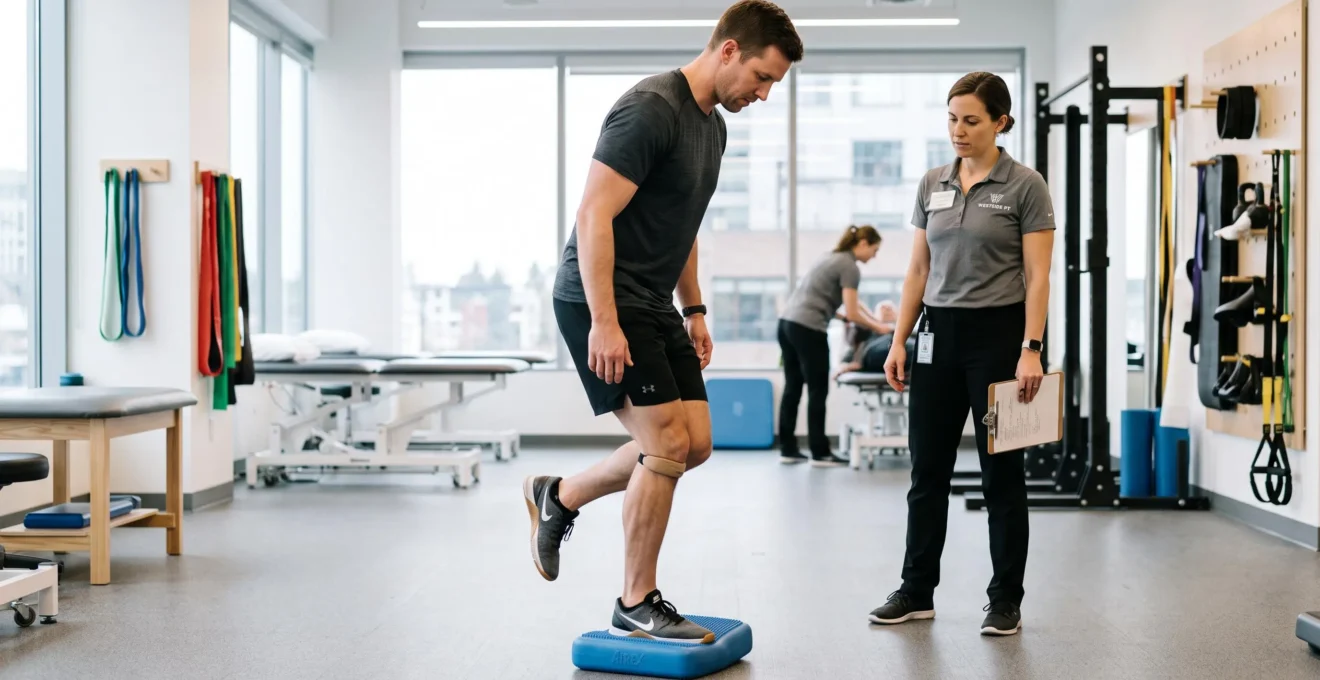
When your surgeon tells you that ACL reconstruction recovery takes nine to twelve months, the timeline can feel both abstract and overwhelming. You’re left wondering what actually happens during those months, whether you’re progressing normally, and if there’s anything you can do to influence the outcome. The answer matters whether you’re an athlete eager to return to competition or simply someone who wants to walk without thinking about each step.
ACL recovery isn’t a passive waiting period where time alone heals your knee. It’s a structured progression through distinct functional phases, each with measurable criteria that determine when you’re ready to advance. Understanding these phases transforms an anxious countdown into an active process where you can track real progress beyond just marking weeks on a calendar. More importantly, knowing why certain biological processes take time helps manage the natural impatience that comes with a long rehabilitation.
Medical information for educational purposes
This article provides general educational information about ACL reconstruction recovery phases. Individual recovery timelines vary significantly based on surgical technique, associated injuries, and personal factors. Always follow your surgeon’s and physical therapist’s specific protocols, which may differ from general timelines described here.
In this article
- What happens to your knee during ACL reconstruction?
- Why does ACL recovery take so long?
- The five functional phases of ACL recovery
- How do associated injuries affect your recovery timeline?
- What signs indicate your recovery is off track?
- How can you optimize each recovery phase?
- Building strength beyond your knee
What happens to your knee during ACL reconstruction?
ACL reconstruction doesn’t repair your torn ligament—it replaces it entirely with a graft, typically harvested from your own patellar tendon, hamstring tendons, or quadriceps tendon. The surgeon creates tunnels through your tibia and femur, threads the graft through these tunnels, and secures it with fixation devices. This graft essentially serves as a biological scaffold that your body will gradually transform into a functioning ligament through a process called ligamentization.
The initial fixation provides mechanical stability, but the graft isn’t immediately strong. Your body must develop new blood vessels into this transplanted tissue (revascularization), integrate the graft into the bone tunnels, and remodel the tissue structure to match the demands of a functional anterior cruciate ligament. This biological transformation follows a timeline that can be optimized but not fundamentally accelerated, regardless of how motivated or disciplined you are with rehabilitation.
What many people don’t realize is that more than 75% of ACL tears occur alongside additional damage—most commonly meniscus tears, but also cartilage injuries or damage to other ligaments like the MCL. During the arthroscopic procedure, your ACL surgeon performs a comprehensive evaluation of all knee structures to identify and address these associated injuries during the same surgery. This isn’t a complication of surgery; it’s detection of damage that occurred during your initial injury.
The presence of these associated injuries significantly affects your recovery protocol. If you have only an ACL reconstruction, you’ll follow one timeline. If your surgeon also repairs a meniscus tear, you’ll face additional restrictions on weight-bearing and range of motion during the initial weeks to protect the meniscal repair. Understanding what was actually done during your surgery is the foundation for understanding why your specific protocol might differ from generic ACL recovery timelines you find online.
Why does ACL recovery take so long?
The most common source of frustration during ACL recovery comes from a fundamental misunderstanding: many patients believe that working harder in physical therapy can significantly shorten the nine to twelve month timeline. While dedication to your rehabilitation absolutely matters for outcomes, it cannot compress the biological processes that must occur within your graft.
Your graft must undergo revascularization—the development of a new blood supply network throughout the tissue. This process begins within the first weeks but takes several months to complete. Without adequate blood supply, the graft cannot receive the nutrients and cellular signals needed for the next phase: ligamentization, where the graft’s cellular and structural composition gradually transforms to resemble a native ACL. These processes follow biological timelines measured in months, not weeks.
Understanding what you can and cannot control: The biological maturation of your graft (revascularization and ligamentization) follows an incompressible timeline regardless of effort. What you can optimize through dedicated work: muscle strength, range of motion, proprioception, and movement quality. Your effort determines whether you meet the functional criteria at each phase, not whether you can skip phases entirely.
Research validates why respecting these timelines matters. According to a prospective study published in the Journal of Orthopaedic & Sports Physical Therapy, athletes who returned to pivoting sports before nine months after ACL reconstruction faced a seven-fold increased rate of second ACL injury compared to those who waited. The American Orthopaedic Society for Sports Medicine notes that each additional month of delay up to nine months reduced reinjury risk by approximately 50%.
7×
higher
Risk of second ACL injury when returning to pivoting sports before 9 months post-reconstruction, compared to waiting at least 9 months (prospective cohort study, young athletes).
This isn’t about arbitrary caution or conservative medical practice. The graft simply hasn’t completed its structural maturation by six months, even if your knee feels stable during daily activities. The tissue needs time to develop the strength and organizational structure required to handle the rapid deceleration, cutting, and pivoting forces that occur in sports like basketball, soccer, or skiing. Feeling good and being physiologically ready are not the same thing.
The five functional phases of ACL recovery
ACL rehabilitation progresses through distinct phases, each with specific functional goals and objective criteria that determine readiness to advance. These phases overlap slightly, and individual progression varies based on your specific surgery, associated injuries, and how consistently you meet the criteria. The timelines below represent typical ranges for isolated ACL reconstruction; associated injuries extend these periods.
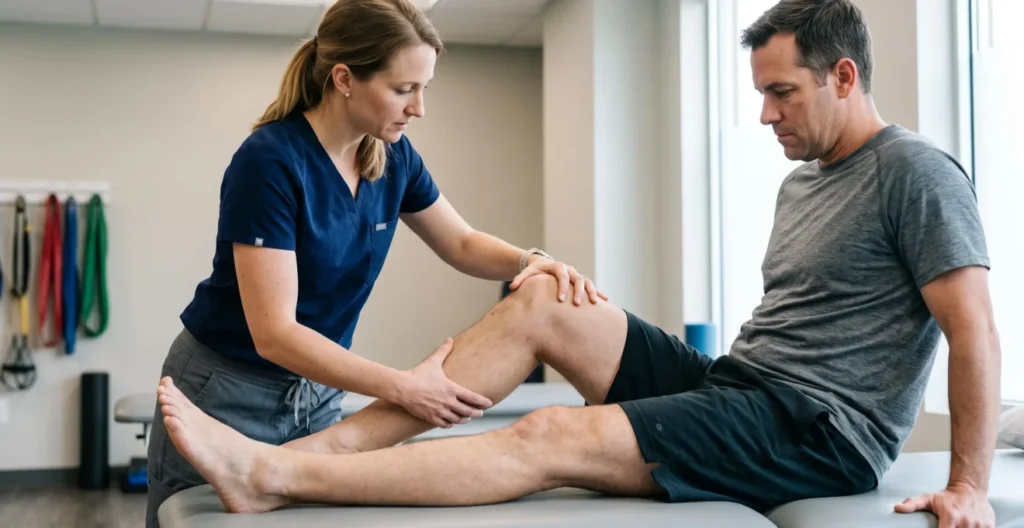
- Phase 1: Protection and early mobility (0-2 weeks post-surgery)The immediate post-operative period focuses on managing pain and swelling, protecting the surgical graft, and beginning gentle passive range of motion. You’ll work on activating your quadriceps muscle, which often shuts down after knee surgery.
Progression criteria: controlled swelling, ability to achieve passive knee flexion to 90 degrees, and quadriceps muscle activation without significant pain.
- Phase 2: Restore full range of motion and normal gait (2-6 weeks)During this phase, you’ll progress from crutches to walking without a limp, restore full knee extension (completely straight), and work toward full flexion matching your uninjured side (typically 0-135 degrees). Gentle strengthening of the quadriceps and hamstrings begins.
Progression criteria: symmetrical range of motion compared to your unaffected knee, walking without visible limp or assistive devices, and minimal swelling after activity.
- Phase 3: Build strength and control (6-12 weeks)This phase emphasizes progressive strengthening through closed-chain exercises (where your foot remains planted), proprioceptive training to restore your knee’s position sense, and gradual increase in functional activities.
Progression criteria: quadriceps strength reaching at least 70% of your uninjured side, no swelling following exercise sessions, and ability to perform single-leg balance for 30 seconds.
- Phase 4: Sport-specific training (3-6 months)You’ll advance to running in straight lines, then progress to controlled cutting and pivoting movements under supervision. Sport-specific exercises begin to mimic the demands of your intended activities.
Progression criteria: quadriceps and hamstring strength at least 85-90% symmetrical, ability to perform running and agility drills without pain or instability, and no persistent swelling.
- Phase 5: Return to sport preparation (6-12+ months)The final phase involves rigorous functional testing including hop tests, psychological readiness assessments, and validation by both your physical therapist and surgeon.
Progression criteria: quadriceps and hamstring strength ≥90% of the uninjured side, hop test performance ≥90% symmetry (single-leg hop, triple hop, crossover hop), full range of motion, psychological confidence to return, and clearance from your medical team. Most athletes require 9-12 months minimum to meet these criteria for pivoting sports.
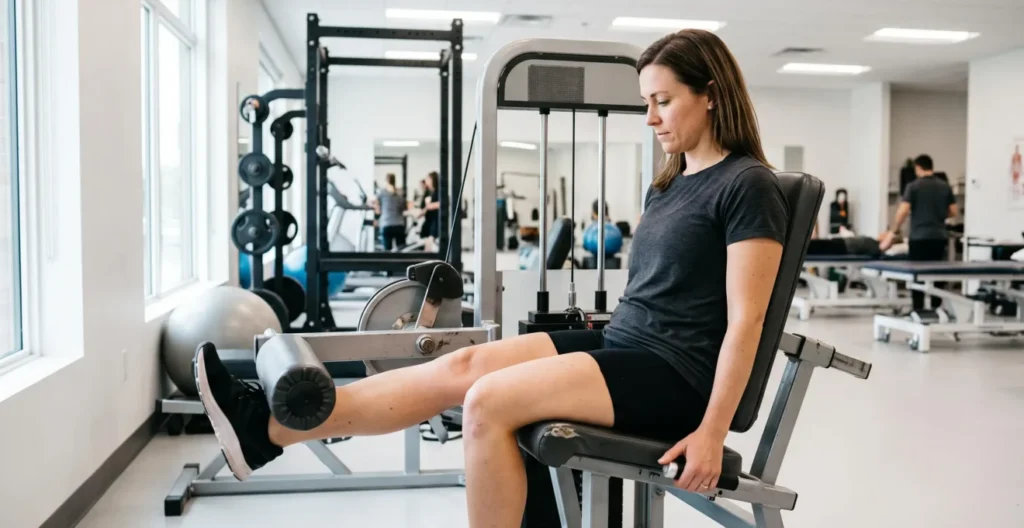
These phases are not strictly separated by calendar dates. You progress by meeting functional criteria, not by simply waiting for time to pass. Someone who diligently attends physical therapy, follows their home exercise program, and manages recovery factors like sleep and nutrition will typically meet each phase’s criteria within the standard timeframes. Someone who misses sessions or doesn’t follow protocols may take significantly longer, not because of poor genetics, but due to insufficient stimulus for adaptation.
For athletes returning to basketball: Phase 4 includes progressively complex cutting and pivoting drills under supervision, but the explosive full-speed pivots, jump-stops, and defensive slides inherent to basketball remain excluded until you’ve completed Phase 5 criteria. That typically means a minimum of nine months, and for many athletes, closer to twelve months before returning to full competitive play.
How do associated injuries affect your recovery timeline?
The standard ACL recovery timeline assumes you had only an ACL tear. But as mentioned earlier, more than 75% of ACL ruptures involve damage to other structures in the knee, most frequently the meniscus. Whether and how your surgeon addresses these associated injuries fundamentally changes your rehabilitation protocol and expected timeline.
The critical distinction involves meniscus treatment approach. If your surgeon performs a partial meniscectomy (removing damaged meniscal tissue), your weight-bearing and range of motion progress relatively normally, though you may need slightly more time in early phases due to additional surgical work. However, if your surgeon performs a meniscal repair (suturing torn meniscus tissue back together), you’ll face significantly different restrictions.
| Criteria | ACL reconstruction alone | ACL + meniscal repair | ACL + partial meniscectomy |
|---|---|---|---|
| Weight-bearing restrictions | Progress to full weight-bearing within 1-2 weeks typically | Partial weight-bearing with crutches for 4-6 weeks to protect repair | Similar to ACL alone, minimal additional restriction |
| Range of motion limitations | Progress to full flexion by 4-6 weeks | Flexion often limited to 90° for first 4 weeks, gradual progression after | Standard progression |
| Timeline to Phase 2 completion | 6-8 weeks typically | 8-12 weeks due to protection period | 6-10 weeks |
| Long-term arthritis risk | Baseline risk from ACL injury itself | Reduced risk by preserving meniscal tissue | Increased risk from loss of meniscal protection |
According to the American Academy of Orthopaedic Surgeons, meniscal repair helps protect knee cartilage and restore stability, particularly when combined with ACL reconstruction. While repair requires additional protection time initially, it preserves the meniscus’s shock-absorbing function and reduces long-term osteoarthritis risk compared to partial removal.
If you have a meniscal repair, expect your Phase 2 to extend by several weeks compared to someone with ACL reconstruction alone. You’ll maintain partial weight-bearing with crutches longer, limit knee flexion to protect the healing meniscal tissue, and delay certain strengthening exercises. This isn’t falling behind—it’s following the appropriate protocol for your specific surgical procedure.
Other associated injuries add further complexity. Concurrent MCL sprains typically heal conservatively alongside ACL recovery but may require a protective brace initially. Cartilage damage may necessitate additional procedures during surgery and can affect long-term outcomes. This is why comprehensive arthroscopic evaluation during surgery matters: identifying and addressing all injuries during the initial procedure optimizes your long-term knee health, even if it complicates the immediate recovery.
What signs indicate your recovery is off track?
Some degree of discomfort, swelling, and frustration is normal throughout ACL recovery. The challenge is distinguishing expected post-surgical symptoms from warning signs that require medical attention. Understanding these red flags reduces anxiety about normal healing while ensuring you don’t ignore genuine complications.
Contact your surgeon immediately if you experience: Fever combined with wound drainage or extensive redness around incisions (possible infection); severe pain that worsens rather than gradually improves or doesn’t respond to prescribed pain medication (possible graft or fixation problem); sudden increase in swelling after a period of improvement, especially with warmth and redness (possible infection or blood clot); or sudden acute pain during an activity suggesting something gave way (possible graft failure).
Beyond these urgent situations, several signs suggest your recovery may need reassessment by your physical therapist or surgeon. Persistent instability—a recurring sensation that your knee might give way during normal daily activities—can indicate inadequate muscle control or, less commonly, issues with graft incorporation. Some initial apprehension about your knee is normal, but if you’re several weeks post-surgery and still experience actual instability rather than just psychological fear, discuss this with your physical therapist.
Progressively worsening range of motion or difficulty performing movements you previously achieved suggests possible arthrofibrosis (excessive scar tissue formation leading to stiffness). Early intervention through aggressive physical therapy or, rarely, surgical intervention can address this complication. If you notice your knee becoming stiffer rather than more mobile over a period of weeks, this warrants evaluation.
Disproportionate or persistent swelling beyond the initial post-operative period needs attention. Some mild swelling after exercise is normal for several months, but significant swelling that doesn’t resolve with rest, ice, and elevation, or swelling that suddenly worsens, may indicate you’re doing too much too soon, have developed inflammation, or have an underlying problem requiring assessment.
A helpful guideline: if a symptom concerns you enough to search for information about it, contact your medical team. Physical therapists and surgeons would rather address your questions early than have you worry unnecessarily or, worse, ignore an early warning sign of a complication. Most concerns turn out to be normal aspects of a challenging recovery process, but clarification from your treatment team provides reassurance and occasionally catches problems early when they’re most manageable.
How can you optimize each recovery phase?
While you cannot compress the biological timeline of graft maturation, you absolutely can optimize your recovery to meet functional criteria at each phase and maximize your long-term outcomes. These are the factors under your direct control that make a measurable difference.
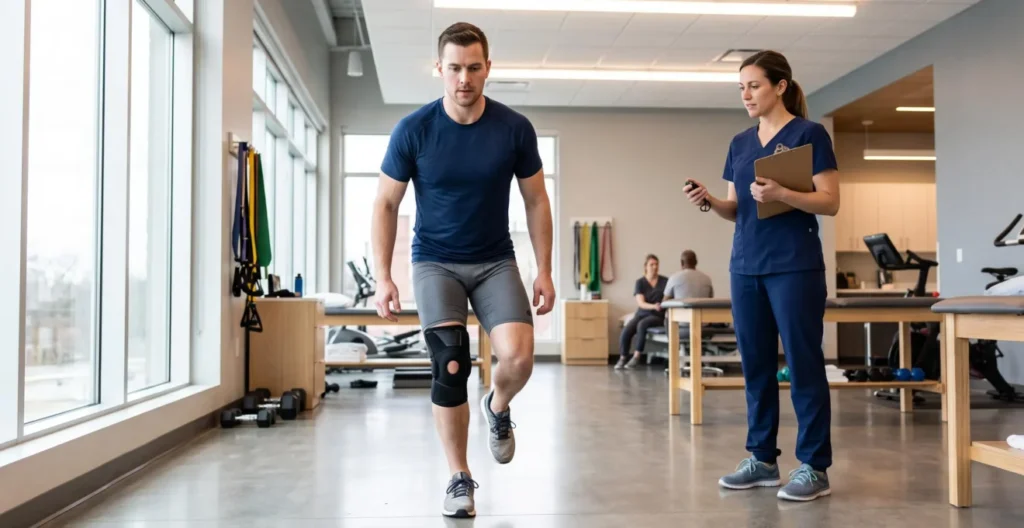
Strict adherence to your physical therapy protocol represents the single most important factor you control. Attending every scheduled session and consistently performing your home exercise program directly impacts muscle strength, range of motion, proprioception, and movement quality—all the functional criteria that determine phase progression. Research consistently shows that compliance with prescribed rehabilitation predicts better outcomes and faster achievement of return-to-sport criteria.
Open communication with your physical therapist allows real-time adjustment of your program. If an exercise causes unexpected pain, if you’re struggling with a particular movement, or if you have questions about what you should be feeling, speak up immediately. Physical therapy isn’t a standardized assembly line; it’s a dynamic process that should be individualized based on your specific response. Your therapist can only make informed adjustments if you provide honest feedback.
Your recovery optimization checklist
- Perfect attendance and compliance with physical therapy sessions and home exercise programs—the factor with the strongest evidence for optimal outcomes
- Protein intake of 1.2-1.6 grams per kilogram body weight to support tissue repair and limit muscle loss during early phases
- Consistent sleep of 7-9 hours nightly as the primary period for tissue repair and motor learning consolidation
- Proactive communication with your physical therapist about symptoms, challenges, and concerns for protocol adjustments
- Progress tracking through measurable criteria (ROM degrees, strength percentages, functional tests) rather than only calendar dates to maintain realistic expectations
Optimize nutrition for tissue healing, particularly protein intake. Your body is rebuilding ligament tissue and maintaining muscle mass despite reduced activity. Aim for approximately 1.2-1.6 grams of protein per kilogram of body weight daily during the first several months. For someone weighing 80 kilograms (about 175 pounds), that translates to roughly 100-130 grams of protein spread throughout the day. Adequate hydration and micronutrients including vitamin C and zinc support collagen synthesis and tissue repair.
Prioritize sleep quality as a non-negotiable recovery factor. During deep sleep, your body releases growth hormone and performs the cellular-level tissue repair that rehabilitation stimulates. Seven to nine hours of quality sleep also improves motor learning, helping you more effectively integrate the movement patterns you practice during physical therapy. Poor sleep undermines both physiological healing and neuromuscular re-education.
Manage the psychological challenge of a months-long recovery. Frustration and impatience are legitimate responses to a process that takes nearly a year. Instead of fixating on distant timelines like “return to basketball in 9 months,” establish micro-goals based on the functional criteria for each phase: “achieve full ROM by week 6,” “reach 80% quadriceps strength by 3 months,” “perform single-leg balance for 60 seconds by 4 months.” Celebrating these measurable achievements sustains motivation and provides objective evidence of progress when the overall timeline feels overwhelming.
For athletes particularly, recognize that maintaining cardiovascular fitness and training your uninjured side throughout recovery preserves overall conditioning and makes the final return smoother. Upper body strength work, stationary cycling (once cleared), and swimming (once incisions are healed) keep you active without jeopardizing your healing knee. This addresses the legitimate concern about losing fitness during a long recovery while channeling your athletic drive into productive activities.
If you’re dealing with the emotional challenges that can accompany long rehabilitation—which many patients experience but few resources acknowledge—recognizing these feelings as normal represents an important step. The combination of lost athletic identity, disrupted routines, and dependence on others creates genuine psychological stress. Some patients benefit from connecting with others who’ve completed ACL recovery, while others find value in working with sports psychologists who specialize in injury rehabilitation. There’s more information available about managing the emotional aspects of recovery, including the mechanisms of chronic pain and psychological factors that can influence rehabilitation outcomes.
When can I drive after ACL surgery?
For surgery on your left knee with an automatic transmission, you can typically drive once you’re off narcotic pain medication and can comfortably perform the movements (usually 1-2 weeks). For surgery on your right knee, most surgeons recommend waiting 4-6 weeks until you’ve regained sufficient quadriceps control and reaction time for emergency braking. Always confirm with your surgeon, and check your insurance policy, as some require written medical clearance.
Can I sleep on my side after ACL reconstruction?
Yes, you can sleep on your side once it’s comfortable, typically within the first week or two. Many patients find placing a pillow between their knees helps. Sleeping with your knee elevated on pillows for the first several nights helps control swelling. There’s no medical reason you must sleep in a specific position; comfort is the primary guide.
How long will I need crutches after ACL surgery?
For isolated ACL reconstruction, most patients transition off crutches within 1-2 weeks as swelling decreases and quadriceps control returns. If you had a meniscal repair, you may need crutches with partial weight-bearing for 4-6 weeks to protect the healing meniscus. Your physical therapist will guide progression from two crutches to one to none based on your gait quality, not just time elapsed.
Building strength beyond your knee
ACL recovery necessarily focuses on your knee, but the months of reduced activity affect your entire body. As you progress through the later recovery phases and begin thinking about full return to activity, recognize that comprehensive conditioning extends beyond meeting the specific ACL return-to-sport criteria.
The deconditioning that occurs during months of modified activity—even if you’ve maintained upper body and cardiovascular work—means your overall stamina and functional capacity need rebuilding alongside your knee-specific function. This is particularly relevant for athletes and active individuals who will return to demanding physical activities. Strategies for systematically rebuilding overall physical capacity after periods of reduced activity can help you develop a complete return-to-sport plan beyond just knee function. You might find the guide to rebuilding stamina helpful for thinking about comprehensive conditioning as you approach full activity clearance.
Your ACL recovery represents a significant investment of time, effort, and patience. The timeline is long because the biological processes of graft integration and maturation require months to complete, not because medical professionals are being arbitrarily conservative. By understanding the functional progression through recovery phases, using objective criteria to measure your actual progress, and optimizing the factors under your control, you transform a passive waiting period into an active process where you can see measurable advancement week by week.
The path from surgery to full sports participation takes most athletes nine to twelve months, and trying to compress that timeline significantly increases reinjury risk. But meeting each phase’s criteria on schedule, maintaining perspective through the inevitable frustrations, and trusting the biological process gives you the best opportunity to return to the activities you love with a stable, functional knee built to last.