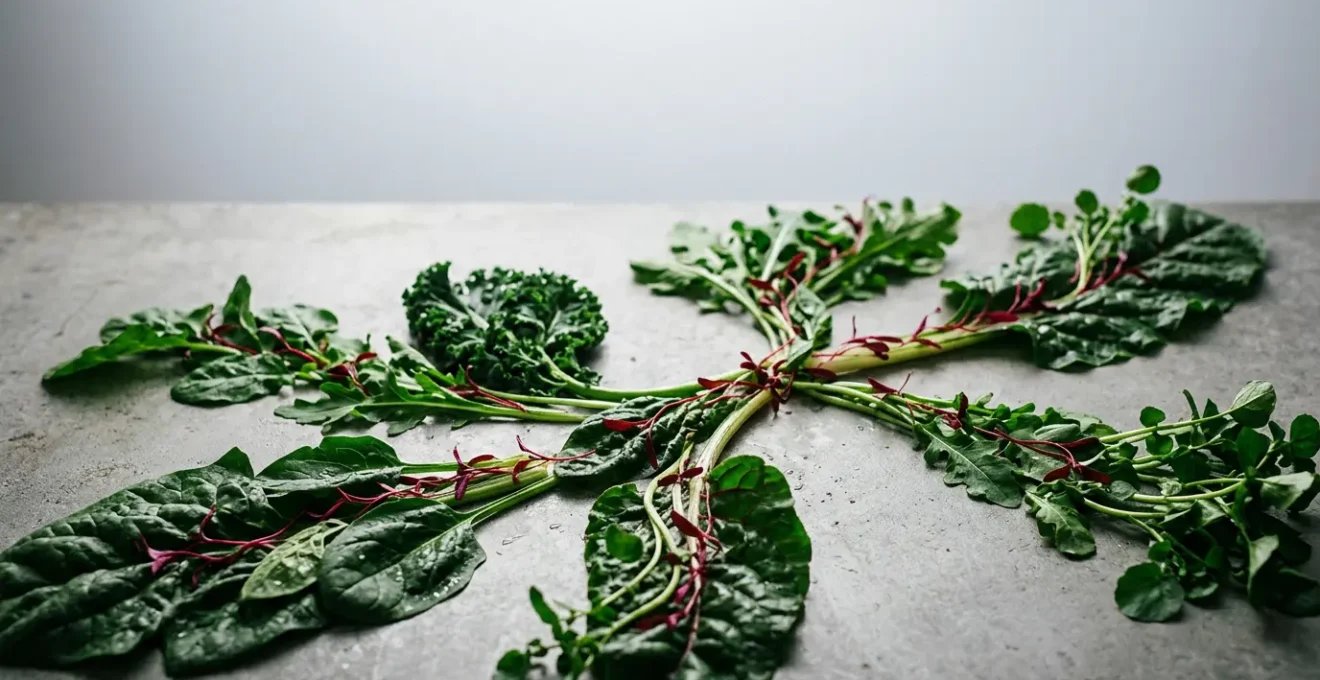
To truly boost nitric oxide from leafy greens for athletic performance, you need a strategy that goes beyond simply eating more spinach.
- Cooking methods drastically alter nutrient bioavailability, reducing harmful oxalates but also beneficial nitrates—a critical trade-off.
- Rotating greens and choosing organic for the “Dirty Dozen” is crucial to avoid accumulating heavy metals and pesticides that can sabotage your health goals.
Recommendation: Implement a rotation of both raw and cooked greens, prioritizing nitrate-rich varieties like arugula, and pair them with protective foods to maximize performance and minimize risk.
For any athlete or individual focused on cardiovascular health, the link between dark leafy greens and nitric oxide (NO) is foundational. We’re told to eat salads and blend smoothies, and for good reason. These vegetables are the most potent dietary source of nitrates, the building blocks for NO—a molecule critical for vasodilation, which improves blood flow, oxygen delivery, and nutrient transport to working muscles. It’s no surprise that nutritional analysis reveals that for the average person, leafy greens can account for 80% of daily nitrate intake.
However, the common advice to simply “eat more greens” is an oversimplification that can be counterproductive. It ignores the complex biochemistry at play. Is raw always better? What about anti-nutrients like oxalates that can lead to kidney stones? How do we navigate the real-world risks of pesticides and heavy metal contamination? The functional nutrition approach isn’t just about what you eat, but about maximizing nutrient density and bioavailability while actively mitigating potential harms.
This guide moves beyond the platitudes. We will dissect the science of how to select, prepare, and rotate your greens for optimal nitric oxide production. The key isn’t to eat more, but to eat smarter. We will explore the critical trade-offs between raw and cooked greens, identify when organic sourcing is non-negotiable, and uncover strategies to protect your body from contaminants, ensuring that your pursuit of performance enhances your health rather than compromising it.
This article provides a strategic framework for incorporating leafy greens into your diet. Below is a summary of the key areas we will cover to help you build a smarter, more effective nutritional plan.
Summary: The Athlete’s Guide to Leafy Greens: Maximizing Nitric Oxide While Minimizing Risks
- How to reduce oxalate content in spinach for kidney stone prevention?
- Raw vs Cooked kale: which delivers more bioavailable nutrients?
- The Dirty Dozen list: when is buying organic non-negotiable?
- Rotation strategy: avoiding heavy metal accumulation from eating only one green
- Bitter greens benefits: stimulating digestion naturally before a meal
- Heavy metals in food: which pantry staples require organic sourcing?
- Gut modulation: how polyphenols feed specifically beneficial bacteria strains
- Why Wild Blueberries Offer More Neuroprotection Than Cultivated Varieties?
How to reduce oxalate content in spinach for kidney stone prevention?
Spinach is a nutritional powerhouse, but for individuals prone to kidney stones, its high oxalate content presents a significant challenge. Oxalates are natural compounds that can bind with calcium and form crystals, the primary culprits in the most common type of kidney stone. Simply consuming large amounts of raw spinach in an effort to boost nitric oxide can inadvertently increase this risk. The key is strategic preparation, which can dramatically lower the bioavailable oxalate content without completely destroying the nutrients you’re after.
Cooking is the most effective method. Heat helps break down and leach soluble oxalates from the plant’s cell walls. Research is clear on this: boiling, in particular, is highly effective. A pivotal study confirms a 30-87% reduction in soluble oxalate content when spinach is boiled. It’s crucial to discard the cooking water, as this is where the leached oxalates reside. While steaming is a gentler cooking method that better preserves some vitamins, it’s less effective at oxalate reduction than boiling.
This highlights a core principle of functional nutrition: there are always trade-offs. To make an informed decision, you must understand the balance between risk mitigation (lowering oxalates) and nutrient preservation (retaining nitrates and vitamins). The following table breaks down these compromises.
| Cooking Method | Oxalate Reduction | Impact on Nitrates | Vitamin C Loss |
|---|---|---|---|
| Steaming | 30% | Moderate (30-43%) | Low to moderate |
| Boiling (high-oxalate greens) | 60% | Moderate to high (30-43%) | High |
| Calcium salt pairing | 50% (soluble), 28% (insoluble) | Minimal | None |
Another effective strategy is pairing high-oxalate greens with calcium-rich foods like yogurt or cheese. The calcium binds with oxalates in the gut, forming a compound that is too large to be absorbed into the bloodstream, and is instead excreted. This prevents the oxalates from reaching the kidneys.
Raw vs Cooked kale: which delivers more bioavailable nutrients?
The “raw versus cooked” debate is central to optimizing your diet, and kale is a perfect case study. The answer isn’t a simple “one is better,” but rather, “better for what?” Your goal determines the ideal preparation method. If maximizing your dietary nitrate intake for nitric oxide production is the primary objective, then raw is superior. The heat from cooking inevitably degrades some of the delicate nitrate compounds. In fact, research comparing raw and cooked leafy greens reveals that raw preparations can retain up to 50% more nitrates.
This visual comparison shows the textural changes between raw and cooked kale, which allude to the underlying shifts in cellular structure and nutrient availability.
However, this is only half the story. Cooking breaks down the tough, fibrous cell walls of kale, which can make other nutrients, like beta-carotene and certain minerals, more bioavailable. Furthermore, like spinach, kale contains oxalates, although in much lower quantities. For those sensitive to oxalates or consuming very large quantities of kale, cooking provides a significant benefit. Lightly steaming or blanching kale can achieve an up to 90% reduction in its oxalate content, making it a much safer choice from that perspective. Cooking also deactivates goitrogens, compounds in raw kale that can interfere with thyroid function in susceptible individuals, especially when consumed in large amounts.
A balanced strategy for an athlete might involve a large raw kale salad on training days to maximize nitrate intake for performance, while incorporating cooked kale into meals on rest days to benefit from a broader range of bioavailable minerals and minimize anti-nutrient exposure over time. It’s about strategic application, not rigid dogma.
The Dirty Dozen list: when is buying organic non-negotiable?
Navigating the grocery store as a health-conscious consumer involves a constant cost-benefit analysis, especially when it comes to organic produce. The “Dirty Dozen” list, published annually by the Environmental Working Group (EWG), provides an essential guide for this decision-making process. This list identifies the top 12 fruits and vegetables with the highest levels of pesticide residue. For athletes and anyone looking to optimize their biology, paying close attention to this list is crucial. Leafy greens like spinach and kale consistently rank high on this list.
Why is this non-negotiable for these specific items? The delicate, large surface area of leafy greens makes them prone to collecting and retaining pesticide sprays. Unlike a banana or avocado, they lack a protective peel. While conventional farming practices have increased crop yields, the long-term, low-dose exposure to a cocktail of pesticides is a significant health concern. As researchers from the Journal of Agricultural and Food Chemistry state, the impact of this exposure is a serious consideration:
Pesticides may enter non-target organisms through multiple ways and bring potential health risks.
– Journal of Agricultural and Food Chemistry research team, Gut Microbiota: A Key Factor in the Host Health Effects Induced by Pesticide Exposure?
The term “potential health risks” covers a range of issues, from endocrine disruption to neurological effects. For an athlete, one of the most concerning impacts is on the gut microbiome—a system intricately linked to inflammation, immunity, and even nutrient absorption. A compromised gut can undermine every other aspect of a meticulously planned diet and training regimen. Therefore, when it comes to the Dirty Dozen, choosing organic is a direct investment in protecting your body’s foundational systems.
This doesn’t mean you must buy everything organic. For produce on the “Clean Fifteen” list (items with the lowest pesticide residues), conventional options are generally a much safer bet. This targeted approach allows you to allocate your resources where they will have the most significant impact on your health, effectively minimizing your pesticide load without breaking the bank.
Rotation strategy: avoiding heavy metal accumulation from eating only one green
While variety is often touted for providing a broad spectrum of vitamins and minerals, a more critical reason for rotating your leafy greens is safety. Plants, like all living things, absorb substances from their environment—not just beneficial nutrients, but also heavy metals present in the soil and water. Certain greens are more prone to accumulating specific metals than others. Spinach, for instance, has been identified as a particularly efficient accumulator of cadmium, a toxic heavy metal that can cause kidney damage and bone issues with chronic exposure.
The difference in accumulation rates between greens can be stark. For instance, industry research from the Western Growers Association reveals that on the same plot of land, spinach can accumulate two to three times more cadmium than romaine lettuce. This means that an individual who consumes a large spinach salad every single day, believing they are making a healthy choice, could be inadvertently building up their body’s toxic load of cadmium. This is a classic example of how a “good habit” can have unintended negative consequences without a more sophisticated strategy.
A strategic rotation of greens is the most effective way to mitigate this risk. By varying your intake—for example, having spinach on Monday, arugula on Tuesday, kale on Wednesday, and romaine on Thursday—you diversify not only your nutrient profile but also your potential contaminant exposure. You avoid consistently consuming the one green that might be accumulating a specific heavy metal from the soil it was grown in. This strategy minimizes the risk of any single toxin reaching a harmful level in your body over time. It’s a simple but powerful principle of risk management applied to your plate.
This approach transforms your diet from a static list of “good foods” to a dynamic system that is resilient and protective. It acknowledges that all foods exist on a nutrient-risk matrix and provides a practical framework for navigating it successfully.
Bitter greens benefits: stimulating digestion naturally before a meal
In the quest for nitrate-rich greens, common choices like spinach and kale often steal the spotlight. However, this overlooks a category of greens that offers a powerful, dual benefit: bitter greens. Varieties like arugula, dandelion greens, and radicchio are not only potent sources of nitrates but also serve as excellent digestive stimulants. The bitter taste, which comes from compounds like glucosinolates in arugula, is not just a flavor—it’s a signal to your digestive system. When bitter compounds hit the taste receptors on your tongue, they trigger a cascade of digestive processes, including the release of saliva, stomach acid, and digestive enzymes. This prepares your gut to efficiently break down and absorb the nutrients from the meal to follow.
From a nitric oxide perspective, some bitter greens are absolute superstars. Arugula (or rocket) is a prime example, containing a staggering amount of nitrates. In fact, a comparative analysis by NutritionFacts.org demonstrates that arugula can contain up to 18 times more nitrate than kale by weight. This makes a small pre-meal arugula salad a highly efficient strategy for priming your body for both digestion and enhanced blood flow.
This simple arrangement of fresh arugula highlights its role as a functional appetizer, preparing the body for both digestion and nitric oxide synthesis.
Incorporating a small, simple salad of bitter greens about 15-20 minutes before your main meal is a classic technique used in European culinary traditions, and the science supports its wisdom. It’s a functional food strategy that acts as a “warm-up” for your digestive tract. For an athlete, this means more efficient nutrient extraction from their food, which is critical for recovery and performance. It’s another example of how a small, strategic addition to your diet can yield disproportionately large benefits.
So, instead of just thinking about the greens within your main meal, consider the strategic use of bitter greens as an appetizer to unlock greater digestive efficiency and a potent nitric oxide boost.
Heavy metals in food: which pantry staples require organic sourcing?
The issue of heavy metals extends beyond fresh produce and into our pantries. Staples like rice, grains, and even some spices can be significant sources of toxic metals like cadmium, lead, and arsenic. The problem is that metal content is highly variable and depends entirely on the soil and water where the food was grown. For instance, a comprehensive analysis of spinach samples in the US showed cadmium levels ranging from 0.01 to 1.1 mg/kg—a more than 100-fold difference. This variability makes consumer choice incredibly difficult, as you can’t taste or see heavy metals.
While organic certification primarily concerns pesticide use, it can also offer a layer of protection against heavy metals. Certified organic farms are subject to stricter regulations regarding soil health and prohibited from using certain synthetic fertilizers and sewage sludge, which can be sources of heavy metal contamination. For certain high-risk pantry staples like brown rice (which readily absorbs arsenic from soil), sourcing from regions with known lower levels (like California) or choosing certified organic can be a prudent risk-reduction strategy.
However, no sourcing strategy is foolproof. Therefore, a more robust approach is to focus on a dietary strategy that enhances your body’s natural detoxification and defense mechanisms against the heavy metals you inevitably consume. This involves consistently consuming foods rich in specific minerals and phytonutrients that can compete with heavy metals for absorption or support their excretion. It’s about building a resilient internal system rather than trying to achieve an impossibly “pure” diet.
Your Action Plan: Dietary Chelation & Protection Strategy
- Selenium Power: Consume 2-3 Brazil nuts daily. Selenium is crucial for producing glutathione, your body’s master antioxidant, and it directly helps protect against cadmium toxicity.
- Zinc Competition: Include sources like pumpkin seeds (about ¼ cup daily). Zinc and cadmium are chemically similar, so having adequate zinc levels can help block cadmium from being absorbed in the gut.
- Cilantro Chelation: Incorporate fresh cilantro into your meals. While more research is needed, some studies suggest it may support the body’s natural chelation processes, helping to bind to and remove heavy metals.
- Detoxification Support: Eat cruciferous vegetables like broccoli and broccoli sprouts. The sulforaphane they contain is a powerful activator of phase II detoxification enzymes in the liver.
- Antioxidant Co-factors: Pair your meals with vitamin C-rich foods like citrus or bell peppers. Vitamin C is a potent antioxidant that helps protect cells from the oxidative damage that heavy metals can cause.
This proactive, two-pronged approach—mindful sourcing combined with a protective dietary pattern—is the most effective way to navigate the unavoidable reality of heavy metals in our food supply.
Gut modulation: how polyphenols feed specifically beneficial bacteria strains
The conversation around leafy greens and health often centers on vitamins, minerals, and nitrates. However, this overlooks one of their most powerful, long-term benefits: their ability to positively shape your gut microbiome. Leafy greens are rich in polyphenols and fiber, which act as prebiotics—food for the beneficial bacteria living in your gut. This is not just a general “fiber is good for you” statement; specific compounds in plants selectively feed specific strains of bacteria.
For example, polyphenols found in dark greens and other colorful plants are too large to be absorbed in the small intestine. They travel largely intact to the colon, where they become a feast for beneficial bacteria like *Akkermansia muciniphila* and *Bifidobacterium*. As these bacteria metabolize the polyphenols, they produce postbiotic compounds like short-chain fatty acids (SCFAs). These SCFAs, particularly butyrate, are the primary fuel source for the cells lining your colon, strengthening the gut barrier, reducing inflammation, and improving overall metabolic health. A strong gut barrier is critical for preventing undigested food particles and toxins from leaking into the bloodstream—a condition known as “leaky gut,” which is linked to systemic inflammation and a host of chronic health issues.
This is where the choice between organic and conventional becomes critically important again. Pesticide exposure doesn’t just present a toxicological risk to you; it’s also a direct assault on your microbiome. A landmark study, the Dutch Microbiome Project involving 7,198 participants, found that pesticide exposure was linked to significant alterations in 39 different bacterial taxa. It can selectively kill off the beneficial strains you’re trying to cultivate while allowing more resilient, potentially harmful strains to thrive. In essence, eating a conventional, pesticide-laden salad can be like taking one step forward and two steps back for your gut health.
By prioritizing a diet rich in a diverse array of polyphenol-containing plants (and choosing organic for high-risk items), you are not just nourishing yourself—you are actively cultivating a thriving internal ecosystem that is fundamental to long-term health and peak performance.
Key Takeaways
- Cooking is a critical trade-off: it reduces harmful oxalates but can also diminish beneficial nitrates, requiring a strategic approach.
- Dietary rotation is non-negotiable for safety, helping to avoid the accumulation of specific heavy metals like cadmium found in some greens.
- Bitter greens like arugula are underrated powerhouses, offering superior nitrate levels for nitric oxide production and stimulating digestion.
Why Wild Blueberries Offer More Neuroprotection Than Cultivated Varieties?
While dark leafy greens are the undisputed champions for nitric oxide production, a truly comprehensive nutritional strategy for an athlete or health-optimizer looks at the entire system. Enhancing blood flow via NO is fantastic for the body, but what about protecting the brain? This is where synergistic functional foods, like wild blueberries, come into play. The difference between wild and cultivated blueberries isn’t just their size; it’s their biochemical composition and, consequently, their potency.
Wild blueberries are smaller, more concentrated, and have a higher skin-to-pulp ratio. This is significant because the deep blue/purple pigments, known as anthocyanins, are most concentrated in the skin. These compounds are powerful antioxidants and anti-inflammatory agents. Wild blueberries thrive in harsh northern climates, and to survive the intense environmental stress (like high UV exposure and cold temperatures), they produce a much higher concentration of these protective anthocyanins than their cultivated cousins. This resilience translates directly into a more potent food for us. These compounds are particularly adept at crossing the blood-brain barrier, where they can exert neuroprotective effects, improving cognitive function, memory, and protecting brain cells from oxidative stress.
This creates a powerful synergy with a nitrate-rich diet. As the PlantStrong Research Team notes, “Leafy greens like spinach, kale, arugula, and Swiss chard are rich in nitrates, which your body converts to nitric oxide when consumed.” This nitric oxide improves blood flow throughout the body, including to the brain. When you combine this enhanced cerebral blood flow with a payload of brain-protective anthocyanins from wild blueberries, you are creating an optimal environment for cognitive health and performance. You’re not just delivering more oxygen and nutrients; you’re delivering them alongside the specific compounds needed to protect the delicate neural machinery.
This is the essence of functional nutrition: not just eating healthy foods in isolation, but understanding how to combine them to create synergistic effects that are greater than the sum of their parts. It’s about protecting the entire system—from muscle tissue to brain cells—to support longevity and peak performance.