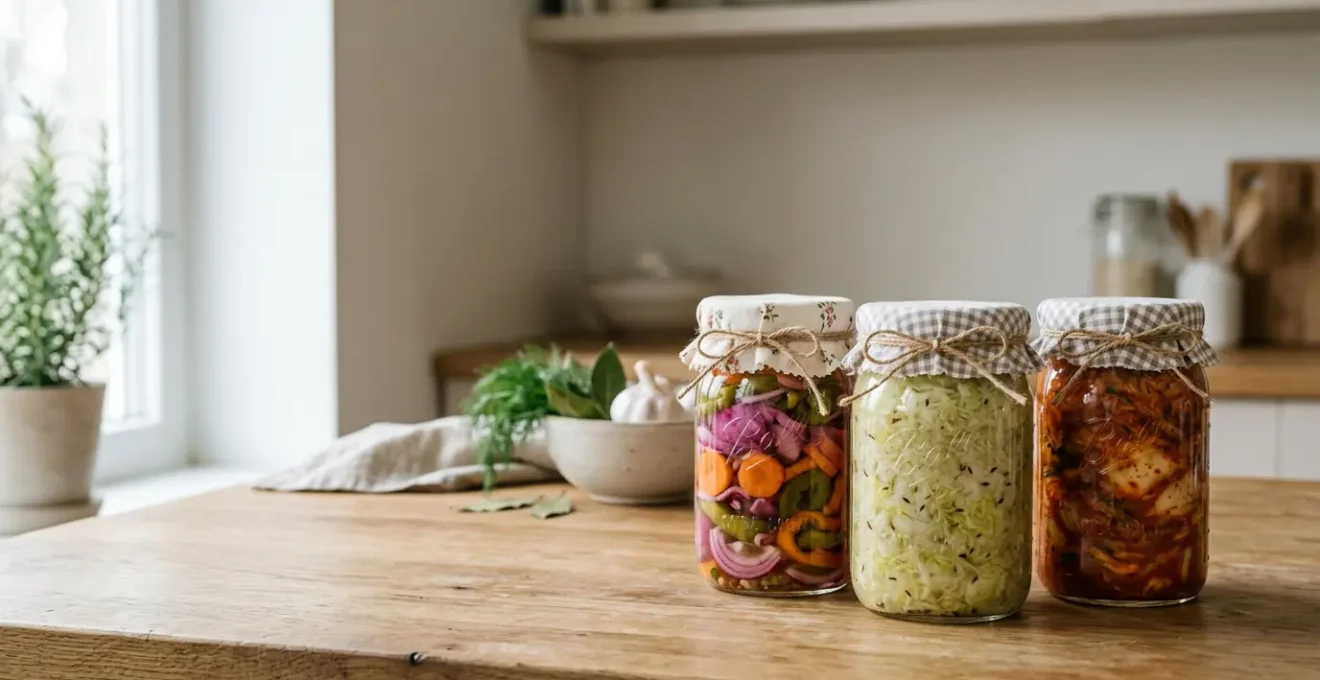
Adding fermented foods without causing bloating requires a clinical strategy, not just “starting small.” The key is to manage the three primary triggers for a sensitive gut: microbial load, histamine content, and FODMAP stacking.
- Identify and choose true probiotic foods, as many commercial options are pasteurized and lack beneficial bacteria.
- Systematically test your histamine threshold using young ferments and a food journal before consuming aged varieties.
Recommendation: Begin with one tablespoon of a low-histamine ferment like fresh milk kefir or 3-day sauerkraut, paired with a familiar prebiotic food, and monitor your body’s response for 48 hours before increasing the dose.
You’ve heard the advice a thousand times: “eat more fermented foods for a healthy gut.” You dutifully bought a jar of sauerkraut or a tub of yogurt, only to be met with uncomfortable bloating, gas, and digestive distress. It’s a frustrating paradox—the very foods meant to heal your gut seem to be making things worse. This experience is incredibly common, especially for those with a sensitive digestive system, IBS, or a history of gut issues. The standard advice to “just start with a teaspoon” often fails because it overlooks the complex reasons *why* your body is reacting.
The problem isn’t necessarily the probiotics themselves, but the specific context in which they are introduced. A sensitive gut isn’t ready for a sudden influx of billions of new microbes, especially when combined with other potential triggers. True success lies in moving beyond generic tips and adopting a more strategic, clinical approach. It’s about understanding that bloating from fermented foods is often caused by one of three main factors: a high microbial load overwhelming your system, a reaction to histamine produced during fermentation, or the stacking of high-FODMAP foods.
But what if you could turn this frustrating trial-and-error process into a predictable strategy? The key isn’t to avoid fermented foods, but to introduce them intelligently. This involves a systematic method of building tolerance, almost like a physical training program for your gut. By de-risking each step, you can successfully cultivate a diverse and resilient microbiome without the painful side effects.
This guide will walk you through a dietitian-led protocol to do just that. We will deconstruct the common pitfalls, from choosing the right products to understanding your personal histamine threshold. You’ll learn how to create a supportive “synbiotic” environment for new bacteria to thrive and discover the profound connection between a happy gut and your mental well-being, all while leaving bloating behind.
Summary: A Dietitian’s Guide to Bloat-Free Fermented Foods
- Why store-bought pickles often lack the probiotics found in homemade versions?
- How to pair prebiotic fibers with probiotics for synbiotic effects?
- Kefir vs Yogurt: which has a broader spectrum of bacterial strains?
- The histamine risk: identifying if fermented foods trigger your headaches?
- Safety first: spotting signs of spoilage in home-fermented vegetables
- The Low-FODMAP trap: why staying on it too long damages gut diversity
- Why gut health determines 90% of your body’s serotonin production?
- How to Boost Serotonin Naturally Without Medication in 30 Days?
Why store-bought pickles often lack the probiotics found in homemade versions?
The first step in your journey is understanding that not all fermented-style foods on the supermarket shelf are created equal. The pickle aisle is a perfect example of this confusion. You might assume that all pickles offer probiotic benefits, but the vast majority are functionally “dead” from a microbial standpoint. The difference lies in the preservation method: fermentation versus pickling.
True fermented pickles are made using a simple brine of salt and water. This process encourages the growth of beneficial lactic acid bacteria, which naturally preserve the cucumbers and create a probiotic-rich food. In contrast, most commercial pickles undergo pasteurization or are made with vinegar. While vinegar gives pickles their characteristic sour taste, this acidic environment prevents the growth of beneficial bacteria. Pasteurization, a heat treatment used to extend shelf life and ensure stability, effectively kills any live cultures that might have been present.
This distinction is critical for anyone seeking gut health benefits. As research from Stanford Lifestyle Medicine highlights, the pickles that are beneficial for your gut are the fermented ones. If you’re buying from a store, look for keywords like “raw,” “unpasteurized,” and “naturally fermented” on the label. These are typically found in the refrigerated section, not on the shelf. The presence of vinegar in the ingredient list is often a sign that the product is pickled, not fermented, and thus lacks the probiotic punch you’re looking for. Choosing the right product is the foundational step before you even consider portion size.
How to pair prebiotic fibers with probiotics for synbiotic effects?
Once you’ve sourced a true probiotic food, the next strategic step is to ensure these new beneficial microbes have the right fuel to survive and thrive in your gut. Simply introducing probiotics without their food source is like planting seeds in barren soil. This is where prebiotics come in. Prebiotics are specific types of dietary fiber that your body can’t digest but that serve as the preferred food for your beneficial gut bacteria. When you intentionally consume probiotics and prebiotics together, you create a powerful synbiotic effect, amplifying the benefits of both.
Think of prebiotics as the fertilizer for your internal garden. They help the newly introduced probiotic strains establish themselves, multiply, and contribute to a healthier gut ecosystem. For a sensitive gut, this is particularly important because a well-fed microbiome is a resilient one, better equipped to handle the introduction of new microbial species without triggering symptoms like bloating. Excellent sources of prebiotic fibers include foods like Jerusalem artichokes, chicory root, garlic, onions, leeks, and slightly under-ripe bananas.
The key to a successful synbiotic strategy is to start gently. You don’t need to consume large quantities of prebiotic-rich foods. Instead, pair a small serving of your chosen fermented food (e.g., a tablespoon of kefir) with a small portion of a prebiotic-rich food you already tolerate well (e.g., a few slices of sautéed leek). This targeted approach provides immediate nourishment to the probiotics, helping them integrate more smoothly into your existing microbiome and reducing the likelihood of digestive upset. It’s a fundamental part of building your gut’s tolerance from the ground up.
Kefir vs Yogurt: which has a broader spectrum of bacterial strains?
As you begin to explore different fermented foods, you’ll quickly notice that yogurt and kefir are two of the most popular and accessible options. While both are cultured dairy products with probiotic benefits, they are far from interchangeable, especially when your goal is to maximize microbial diversity. From a clinical perspective, kefir is often superior due to its significantly broader and more diverse spectrum of bacteria and beneficial yeasts.
Commercial yogurt is typically fermented with a handful of bacterial strains, usually two to five specific types of active cultures like *Lactobacillus bulgaricus* and *Streptococcus thermophilus*. Kefir, on the other hand, is fermented using kefir grains, which are a complex symbiotic culture of bacteria and yeasts (a SCOBY). This results in a much more diverse final product. In fact, research from UCI Health demonstrates that kefir grains can contain up to 61 strains of beneficial bacteria and yeasts, a stark contrast to the limited strains in most yogurts.
This diversity is the primary advantage of kefir. A wider range of microbes can perform a wider range of functions in your gut, from producing different vitamins to helping digest various foods. Furthermore, the presence of beneficial yeasts in kefir is unique and can help balance the gut ecosystem and prevent the overgrowth of less desirable organisms. For a more detailed comparison, the following table breaks down the key differences.
| Characteristic | Kefir (grain-based) | Yogurt (commercial) |
|---|---|---|
| Number of bacterial strains | 20-40+ distinct species | 2-5 active cultures |
| Includes beneficial yeasts | Yes (Saccharomyces, Kluyveromyces) | No |
| CFU count (Colony Forming Units) | 25-50 billion CFU | ~6 billion CFU (average) |
| Microbial diversity type | Bacteria + Yeasts (SCOBY) | Bacteria only |
| Production method | Live kefir grains (self-sustaining) | Standardized starter cultures |
For someone with a sensitive gut, the higher potency and diversity of kefir mean it’s essential to start with a very small dose—perhaps just one tablespoon—and gradually increase. However, its rich microbial profile makes it a powerful tool for rebuilding gut diversity once tolerated.
The histamine risk: identifying if fermented foods trigger your headaches?
If you experience symptoms like headaches, skin flushing, itching, or nasal congestion after consuming fermented foods—even when starting with a small amount—you may be reacting to histamine. Histamine is a natural compound produced by certain bacteria during the fermentation process. While most people have an enzyme called diamine oxidase (DAO) that breaks down histamine in the gut, some individuals have lower levels of this enzyme, leading to a condition known as histamine intolerance.
When you consume more histamine than your body can break down, it can build up and cause allergy-like symptoms. Fermented foods, especially those that are aged longer (like mature sauerkraut, aged cheese, and kimchi), are notoriously high in histamine. This is a common and often overlooked reason why people with sensitive systems react poorly to them. The solution isn’t necessarily to avoid all ferments forever, but to understand your personal histamine threshold and choose your foods accordingly.
Younger ferments generally contain less histamine. For example, sauerkraut fermented for only 3-5 days will have a much lower histamine content than a jar that has been fermenting for several weeks. Likewise, fresh milk kefir is typically lower in histamine than aged kefir or kombucha. To determine if histamine is a trigger for you, a systematic elimination and reintroduction protocol is the most effective method. This allows you to isolate the variable and observe your body’s reaction in a controlled way.
Your Action Plan: The 3-Step Histamine Identification Protocol
- Days 1-3 (Washout): Begin with a complete ‘low-histamine washout.’ Eliminate all common high-histamine foods, including all fermented products, aged cheeses, cured meats, and alcohol to establish a baseline.
- Day 4 (Reintroduction): Reintroduce only ONE young, low-histamine ferment. Start with a single tablespoon of a product like 3-day homemade sauerkraut or fresh, 24-hour milk kefir with a meal.
- Days 4-6 (Observation): Meticulously journal any symptoms that appear within 24-48 hours. Specifically track headaches, flushing, skin itching, or nasal congestion.
- Analysis: If symptoms appear, histamine is a likely trigger. Your focus should be on younger ferments and supporting your DAO enzyme with nutrients like Vitamin C, B6, and copper-rich foods.
- Progression: If no symptoms occur, you can gradually increase the portion size of the young ferment or test another low-histamine option over the following weeks, slowly building your tolerance.
Safety first: spotting signs of spoilage in home-fermented vegetables
As you venture into the world of truly fermented foods, especially if you decide to try making your own, safety becomes paramount. The idea of cultivating bacteria at home can be intimidating, but the process is remarkably safe when you know what to look for. Fermentation relies on creating an environment where beneficial bacteria thrive and harmful ones cannot. The two pillars of this safe environment are salt and the absence of oxygen.
The brine creates an acidic, anaerobic environment (free of oxygen) that is inhospitable to spoilage microbes like mold. This is why the most critical rule in vegetable fermentation is to keep everything submerged under the brine. Any vegetable matter exposed to air is a potential site for mold growth. Using fermentation weights or even a clean small plate to press the vegetables down is non-negotiable for a safe and successful ferment.
Your senses are your best guide. A healthy ferment will have a pleasantly sour, tangy, or even “pickle-like” aroma. The brine might be cloudy, and you’ll likely see bubbles, which are signs of active, healthy fermentation. Conversely, signs of spoilage are unmistakable. Fuzzy, colorful mold (black, green, pink, or orange) is a definite red flag, and the entire batch must be discarded—do not try to skim it off. A putrid, rotten, or “off” smell is another clear indicator that something has gone wrong. By learning to distinguish between the signs of a healthy, active ferment and the signs of spoilage, you can confidently and safely enjoy the benefits of homemade probiotic foods.
The Low-FODMAP trap: why staying on it too long damages gut diversity
For many people with IBS and severe gut sensitivity, the Low-FODMAP diet is a revolutionary diagnostic tool. By temporarily removing fermentable oligosaccharides, disaccharides, monosaccharides, and polyols, it can provide significant relief from bloating, pain, and gas. However, a critical misunderstanding has led many to fall into the “Low-FODMAP trap”: staying on the highly restrictive elimination phase for far too long. This diet was never intended to be a permanent lifestyle.
The very reason FODMAPs can cause symptoms is the same reason they are beneficial for your gut in the long run: they are powerful prebiotics. They are the primary food source for many of your most important beneficial bacteria. When you strictly limit them for months or years, you are effectively starving your microbiome. Research has shown that long-term adherence to a low-FODMAP diet can lead to a significant reduction in key bacterial populations, such as *Bifidobacteria*, and a decrease in overall gut diversity. This can ultimately make your gut even more sensitive and less resilient over time.
The true purpose of the diet is to provide a temporary window of calm (the elimination phase, lasting 2-6 weeks) to allow you to systematically reintroduce FODMAP groups and identify your specific triggers and tolerance levels. The goal is to return to the most diverse diet you can comfortably tolerate. This is where carefully introduced fermented foods can play a crucial role *after* the initial elimination phase. Low-histamine, low-FODMAP ferments (like small amounts of milk kefir or specific yogurts) can be one of the first foods reintroduced to help begin the process of rebuilding the microbial diversity that was diminished during the restrictive period.
Why gut health determines 90% of your body’s serotonin production?
The benefits of cultivating a healthy gut extend far beyond digestion. One of the most profound connections is the gut-brain axis, the intricate communication network that links your digestive system to your brain. A key player in this connection is serotonin, a neurotransmitter often called the “feel-good” chemical, which is crucial for regulating mood, sleep, and appetite. What is truly astonishing is where the vast majority of it is made. Groundbreaking research from Caltech revealed that up to 90 percent of the body’s serotonin is produced in the digestive tract, not the brain.
This production isn’t a solo act; it’s a collaborative effort between your gut cells and your microbiome. Specialized cells in the gut lining, known as enterochromaffin cells, are the primary producers of serotonin. However, the presence and activity of specific gut bacteria are required to stimulate these cells to produce it. These microbes break down dietary tryptophan—an amino acid found in foods like turkey, nuts, and seeds—into metabolites that signal the enterochromaffin cells to synthesize and release serotonin. Without a healthy and diverse community of gut bacteria, this entire production line is compromised.
This mechanism was powerfully demonstrated in a landmark study that serves as a compelling case for the importance of the microbiome in mental well-being.
Case Study: The Caltech Study on Gut Microbes and Serotonin
Researchers at Caltech conducted an experiment comparing normal mice with germ-free mice that lacked any gut bacteria. They found that the germ-free mice produced approximately 60% less serotonin than their counterparts. This confirmed a significant drop in production without a microbiome. In the next phase, when these germ-free mice were recolonized with a community of about 20 species of spore-forming bacteria, their serotonin levels returned to normal. This demonstrated a direct causal link: specific gut bacteria are essential for triggering normal serotonin production in the gut.
This powerful link underscores why a protocol to improve gut health is also a strategy for improving mood and overall well-being. By nurturing your microbiome with a diverse diet, including carefully introduced fermented foods, you are directly supporting your body’s ability to produce this vital neurotransmitter.
Key takeaways
- Bloating from fermented foods is often due to microbial load, histamine, or FODMAPs—not just portion size.
- True probiotic foods are raw and unpasteurized; most commercial pickles are not probiotic.
- A healthy gut microbiome is directly responsible for producing the vast majority of your body’s serotonin, linking gut health to mood.
How to Boost Serotonin Naturally Without Medication in 30 Days?
Understanding that your gut is your primary serotonin factory transforms the way you approach mental well-being. It shifts the focus from a purely brain-centric view to a holistic, whole-body strategy. Boosting serotonin naturally becomes a tangible goal rooted in diet and lifestyle. By applying the principles we’ve discussed, you can create a practical 30-day plan to support your gut-brain axis and enhance your body’s natural production of this vital neurotransmitter.
The foundation of this plan is nutrition. First, ensure you’re consuming adequate amounts of tryptophan, the amino acid precursor to serotonin. Incorporate foods like turkey, chicken, nuts, seeds, and oats into your diet. Second, implement the synbiotic strategy: pair these tryptophan-rich foods with both prebiotic fibers and carefully chosen probiotic foods. This provides the raw materials (tryptophan) and the “workers” (probiotics) needed for production, along with the fuel (prebiotics) to keep the workers energized.
Over the 30 days, follow the tolerance ladder protocol. Start with one tablespoon of a low-histamine ferment like milk kefir or young sauerkraut daily for the first week. If tolerated, increase to two tablespoons in the second week, and consider introducing a second type of ferment in the third week to further boost diversity. Alongside diet, integrate other known serotonin boosters: aim for at least 15-20 minutes of daily sun exposure to stimulate serotonin production in the skin, and engage in regular physical activity, which has been proven to increase both the production and release of serotonin. This combined approach creates a powerful, synergistic effect that supports your mental and physical health from the inside out.
By consistently applying this multi-faceted strategy, you empower your body’s natural systems. Your next step is to choose one low-histamine fermented food and begin your own gradual tolerance-building journey today.
Frequently Asked Questions on How to Introduce Fermented Foods Without Causing Bloating?
How can I tell the difference between safe Kahm yeast and dangerous mold?
Kahm yeast appears as a flat, white, wavy film on the surface that can be safely skimmed off. Dangerous mold is fuzzy with colored spots (black, green, or pink) – if you see this, discard the entire batch immediately.
What pH level indicates a safely fermented vegetable?
A healthy ferment should have a pH below 4.6, ideally below 4.0. You can test this using inexpensive pH strips available at most pharmacies or online. This acidic environment prevents harmful bacterial growth.
Is it normal for my ferment to smell strong?
Yes, a ‘pleasantly sour’ or tangy smell is expected and healthy. However, if the smell is ‘putrid’, ‘rotten’, or resembles spoiled food, this indicates spoilage and the batch should be discarded.
Why is keeping vegetables submerged under brine so critical?
Spoilage almost always occurs on the surface where vegetables are exposed to oxygen. The brine creates an anaerobic environment essential for beneficial lactic acid bacteria while preventing mold growth. Always use fermentation weights to keep everything submerged.