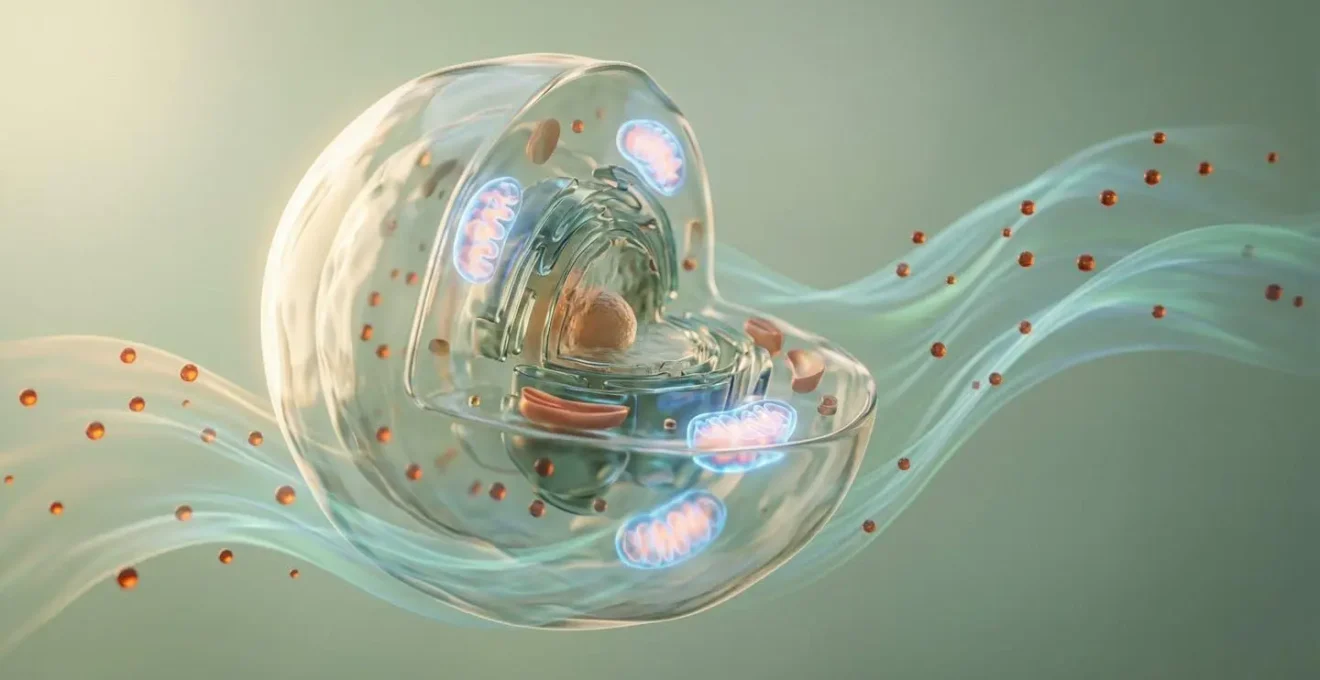
Reducing oxidative stress isn’t just about eating berries; it’s about systematically switching off the cellular signals that accelerate aging.
- Manage glycation (AGEs) by altering cooking methods and diet to protect skin and joints.
- Harness hormetic stress through adapted fitness to build cellular resilience, not cause damage.
- Actively combat ‘inflammaging’ by supporting gut health and promoting cellular cleanup (autophagy).
Recommendation: The key is to shift from passive antioxidant consumption to actively modulating your body’s core aging pathways through precise, daily interventions.
The subtle signs of aging often creep in unnoticed: a new stiffness in the joints, skin that seems less resilient, or recovery from a workout that takes a little longer. We tend to dismiss these as inevitable consequences of time. But from a geroscience perspective, they are symptoms of a persistent, low-grade fire inside our cells: oxidative stress. This is the fundamental imbalance between the production of damaging free radicals and the body’s ability to counteract them.
The common advice to “eat more antioxidants” or “avoid stress” is well-intentioned but incomplete. It’s like trying to put out a forest fire with a single bucket of water. These tips are mere pieces of a much larger puzzle. They don’t address the underlying machinery of cellular aging, nor do they explain why our bodies become less efficient at managing this damage over time. This approach misses the bigger picture of our internal cellular environment.
The real leverage in the fight against cellular decay lies in understanding and influencing the core biochemical pathways that govern aging. The key is to become an active director of your cellular health, not just a passive consumer of antioxidants. This means learning how to modulate foundational aging pathways like AMPK (the body’s energy sensor and master repair switch) and mTOR (a growth pathway that can accelerate aging when overactive). It involves managing the accumulation of senescent “zombie” cells and learning to turn stressors into strengths through a concept known as hormesis.
This guide moves beyond superficial tips. We will deconstruct the primary drivers of oxidative stress, explain the specific mechanisms at play, and provide scientifically-grounded, actionable strategies. By understanding how to influence these systems, you can build a robust defense against cellular aging from the inside out, promoting not just a longer lifespan, but a longer “healthspan.”
To help you navigate these complex but powerful concepts, this article is structured to build your understanding step-by-step. We will explore the key mechanisms of cellular damage and the precise habits that can counteract them.
Summary: A Geroscientist’s Framework for Reducing Oxidative Stress
- Why advanced glycation end-products (AGEs) age your skin and joints faster?
- How to protect telomere length through stress reduction techniques?
- Sarcopenia vs Osteoporosis: which poses a greater risk for modern seniors?
- The “inflammaging” cycle: halting the low-grade fire damaging your organs
- Neuroplasticity training: the specific activities that prevent cognitive atrophy
- Genetic testing vs Family history: which predicts cancer risk better?
- Why environmental factors trigger dormant genes in 40% of carriers?
- How to Adapt Your Fitness Routine After 50 to Prevent Injury?
Why advanced glycation end-products (AGEs) age your skin and joints faster?
Advanced Glycation End-products, or AGEs, are one of the most direct and visible drivers of aging. They form when excess sugar molecules in your bloodstream bind to proteins or fats in a process called glycation, creating dysfunctional, cross-linked structures. Think of it as a slow, internal “caramelization” process that makes flexible tissues rigid and brittle. This molecular damage is particularly detrimental to long-lived proteins like collagen, which provides the structural framework for your skin, blood vessels, and joint cartilage.
As AGEs accumulate, they cause collagen fibers to become stiff and cross-linked, leading to wrinkles, sagging skin, and reduced elasticity. In your joints, this same process contributes to the breakdown of cartilage, resulting in stiffness and arthritis. Beyond the structural damage, AGEs also trigger a cascade of oxidative stress and inflammation, further accelerating the aging process. While your body naturally produces some AGEs, your diet plays a significant role. In fact, research indicates that dietary sources can contribute 10-30% of the circulating AGEs in your body. High-heat, dry cooking methods like grilling, frying, and roasting are major culprits in forming these compounds in food.
As this visualization shows, the formation of AGEs isn’t a one-off event; it’s a self-perpetuating cycle. The amber-colored crystalline deposits embedded between collagen fibers represent these harmful cross-links. By understanding this mechanism, you can take targeted steps to mitigate their impact, primarily by modifying your diet and cooking methods. Opting for moist-heat cooking like steaming, poaching, or stewing, and reducing your intake of processed, high-sugar foods are powerful strategies to lower your AGE burden and protect your tissues from this form of accelerated aging.
How to protect telomere length through stress reduction techniques?
If DNA is the blueprint for your cells, telomeres are the protective caps at the end of each chromosome, preventing the code from unraveling during cell division. With each division, these telomeres naturally shorten, acting as a kind of cellular clock. When they become critically short, the cell stops dividing and enters a state of senescence or apoptosis (programmed cell death). Oxidative stress is a primary accelerator of telomere shortening. However, another powerful factor is psychological stress, which exerts its influence through the hormone cortisol.
Chronic stress keeps the body in a perpetual “fight or flight” state, leading to sustained high levels of cortisol. This hormone, while useful in short bursts, has a corrosive effect on the body over time. One of its key impacts is on telomerase, the enzyme responsible for repairing and maintaining telomere length. Chronic stress can suppress the activity of telomerase, effectively speeding up the cellular clock and accelerating the aging process at a fundamental level.
The connection between the mind and cellular aging is not just theoretical. As explained by leading researchers, the hormonal response to stress has direct physical consequences. Rita Effros, a researcher at UCLA Health, highlighted this in a study on the topic:
When the body is under stress, it boosts production of cortisol to support a ‘fight or flight’ response. If the hormone remains elevated in the bloodstream for long periods of time, though, it wears down the immune system.
– Rita Effros, UCLA Health study on stress and telomerase
This insight underscores the importance of proactive stress management not as a luxury, but as a core pillar of a longevity strategy. Techniques like mindfulness meditation, deep breathing exercises (coherent breathing), and spending time in nature are not merely for relaxation. They are powerful interventions that help regulate the HPA axis (the body’s central stress response system), lower circulating cortisol levels, and create a more favorable environment for telomerase activity, thereby protecting the very integrity of your DNA.
Sarcopenia vs Osteoporosis: which poses a greater risk for modern seniors?
As we age, two conditions silently undermine our physical structure: sarcopenia, the progressive loss of muscle mass and strength, and osteoporosis, the decline in bone mineral density that makes bones brittle and prone to fracture. The question of which poses a greater risk is, from a geroscience perspective, a false dichotomy. The real danger lies in their synergistic relationship, a condition now termed osteosarcopenia. Muscle and bone are not independent tissues; they are in constant communication, and the decline of one invariably accelerates the decline of the other.
Oxidative stress and chronic inflammation are the common enemies that attack both systems simultaneously. Strong, active muscles send mechanical and biochemical signals (myokines) that stimulate bone formation. When muscle mass declines due to sarcopenia, this crucial signaling diminishes, weakening the bones. Conversely, weak bones and joint instability limit physical activity, which in turn leads to further muscle atrophy. This creates a vicious cycle of frailty, instability, and an exponentially increased risk of falls and fractures, which are a leading cause of disability and loss of independence in older adults.
This conceptual image illustrates the interconnectedness of the problem. The parallel degradation of bone (the porous white structure) and muscle (the fibrous red tissue) is driven by shared inflammatory and oxidative pathways. Therefore, the most effective strategy is not to treat one in isolation, but to target the root causes affecting both. The primary intervention is resistance training. Lifting weights or using resistance bands creates mechanical stress that simultaneously stimulates muscle protein synthesis (countering sarcopenia) and signals bone-building cells (osteoblasts) to increase bone density (countering osteoporosis). This dual-action approach is fundamental to maintaining structural integrity and functional independence.
The “inflammaging” cycle: halting the low-grade fire damaging your organs
One of the central hallmarks of aging is a chronic, low-grade, systemic inflammation that scientists have termed “inflammaging.” Unlike the acute inflammation that helps you heal from an injury, this is a persistent, smoldering fire that silently damages tissues and organs throughout the body. It is a major contributor to nearly every age-related disease, from heart disease and diabetes to neurodegeneration. A key driver of this cycle is the accumulation of senescent cells—older, damaged cells that have stopped dividing but refuse to die.
These “zombie” cells secrete a cocktail of inflammatory proteins known as the Senescence-Associated Secretory Phenotype (SASP). This cocktail perpetuates a pro-inflammatory environment, which in turn can push neighboring healthy cells into a state of senescence, creating a self-amplifying loop of damage. A 2024 review in the International Journal of Molecular Sciences confirms this direct link, explaining how SASP is a primary mechanism behind the development of inflammaging.
This process is not just an abstract theory; it’s a core mechanism of biological aging. As researchers from the review point out, the connection is direct and causal:
The accumulation of SASP over several years leads to chronic low-grade inflammation with advancing age, also known as inflammaging.
– Lawrence et al., International Journal of Molecular Sciences
Halting this cycle requires a multi-pronged approach focused on reducing the senescent cell burden and quenching the inflammatory fire. This involves promoting autophagy (the body’s cellular cleanup process) and strengthening the body’s anti-inflammatory defenses, particularly in the gut, which is a major regulator of systemic inflammation.
Action plan: Daily habits to reduce inflammaging
- Consume polyphenol-rich foods such as berries, dark leafy greens, and nuts to neutralize free radicals and support gut health.
- Include fermented products like yogurt, kefir, or sauerkraut to supply beneficial gut bacteria and strengthen the gut barrier.
- Eat foods with natural senolytic compounds, like fisetin from strawberries and quercetin from onions, to help the body clear senescent cells.
- Practice coherent breathing at a rate of 5-6 breaths per minute to strengthen parasympathetic tone and lower the stress hormone cortisol.
- Prioritize 7-9 hours of quality sleep to allow the body to conduct essential repair processes, including autophagy and regulation of inflammatory cytokines.
Neuroplasticity training: the specific activities that prevent cognitive atrophy
The brain, like muscle, adheres to the “use it or lose it” principle. Cognitive decline is not an inevitable fate but often a result of reduced stimulation and increased oxidative stress, which damages neurons and their connections. Neuroplasticity is the brain’s remarkable ability to reorganize itself by forming new neural connections throughout life. Actively engaging in activities that challenge the brain is a direct way to stimulate this process, building cognitive reserve and resilience against age-related decay.
The most effective neuroplasticity training involves activities that are novel, complex, and engaging. Simply doing crossword puzzles every day is not enough, as the brain quickly becomes efficient at familiar tasks. The key is to force your brain to build new pathways. This could mean learning a musical instrument, taking up a new language, or even navigating a new city without a GPS. These activities demand attention, memory, and problem-solving, which stimulates the production of crucial growth factors like Brain-Derived Neurotrophic Factor (BDNF). BDNF acts like a fertilizer for neurons, promoting their growth, survival, and the formation of new synapses.
Physical exercise plays a surprisingly powerful and synergistic role in this process. It increases blood flow to the brain, delivering more oxygen and nutrients. More importantly, studies confirm that regular, moderate exercise enhances the body’s own production of antioxidants, creating a less hostile, low-inflammation environment for neurons to thrive. Combining cognitive and physical challenges—such as listening to an educational podcast while walking—can have an even greater effect on BDNF levels. This holistic approach, which also includes a diet rich in brain-protective nutrients like omega-3 fatty acids (from walnuts) and anthocyanins (from blueberries), provides the raw materials and the stimulus needed for sustained cognitive function.
Genetic testing vs Family history: which predicts cancer risk better?
In the age of personalized medicine, a common question arises: is a genetic test or a detailed family history a better predictor of cancer risk? The answer is that they are not competing tools, but complementary ones. A family history can reveal patterns of disease that suggest a hereditary component, but it cannot identify the specific genetic mutation responsible. Genetic testing, on the other hand, can pinpoint specific variants, such as mutations in the BRCA1 or TP53 genes, that are known to significantly increase cancer risk. However, having a genetic predisposition does not seal your fate.
The critical factor that often turns a genetic potential into a clinical reality is the cellular environment, and oxidative stress is a primary antagonist in this story. Genes load the gun, but lifestyle and environment pull the trigger. Chronic oxidative stress damages DNA. While your cells have robust DNA repair mechanisms, a constant barrage of damage can eventually overwhelm these systems, leading to a mutation in a critical gene that initiates cancer. For individuals with an inherited mutation in a tumor suppressor gene, this process is accelerated, as one of their key defense systems is already compromised.
This is why managing oxidative stress is a universal and non-negotiable strategy for cancer risk reduction, regardless of your genetic makeup. As a comprehensive review in *Frontiers in Pharmacology* emphasizes, its role is not peripheral but central:
Oxidative stress plays an essential role in the pathogenesis of chronic diseases such as cardiovascular diseases, diabetes, neurodegenerative diseases, and cancer.
– Multiple researchers, Frontiers in Pharmacology review on Lifestyle, Oxidative Stress, and Antioxidants
Therefore, while both genetic testing and family history provide invaluable information for risk stratification and screening protocols, the most powerful predictive—and preventive—tool remains in your hands. A lifestyle that actively minimizes oxidative damage through diet, exercise, and stress management provides a robust defense that can help keep even “high-risk” genes silent.
Why environmental factors trigger dormant genes in 40% of carriers?
The fact that only a fraction of individuals carrying a high-risk gene will actually develop the associated disease highlights a crucial concept in modern genetics: epigenetics. Your DNA sequence is not a fixed blueprint; it’s more like a complex script with certain passages that can be highlighted or silenced. Environmental factors are the “directors” that make these changes. They don’t alter the DNA code itself, but they add or remove chemical tags (like methyl groups) that control which genes are switched “on” or “off.” Oxidative stress is a master epigenetic regulator.
A modern lifestyle is a potent source of pro-oxidative environmental triggers. Air pollution, pesticides in food, industrial chemicals, and even certain plastics can generate free radicals in the body. Furthermore, a diet high in processed foods, sugar, and unhealthy fats is a significant contributor to the body’s total oxidative load. When this chronic oxidative assault is sustained over years, it can lead to aberrant epigenetic changes. For someone with a genetic predisposition, this can be the final push that silences a protective tumor suppressor gene or activates a dormant oncogene (a cancer-promoting gene).
This explains why two people with the same genetic mutation can have vastly different health outcomes. The one living in a clean environment, eating a whole-food diet, and actively managing stress may keep their risky gene “dormant” for life. The other, exposed to a high toxic load and poor lifestyle choices, may provide the exact epigenetic signals needed to trigger the disease. Creating a “low-toxin” personal environment is a powerful strategy to reduce the oxidative triggers that can activate dormant genetic risks. This includes filtering your drinking water, choosing glass over plastic for food storage, using air purifiers to reduce indoor pollutants, and minimizing exposure to pesticides by opting for organic produce where possible.
Key takeaways
- Oxidative stress is a core mechanism of aging, driven by factors beyond simple free radical damage, including glycation, telomere shortening, and chronic inflammation.
- True anti-aging strategy involves modulating key cellular pathways like AMPK and mTOR through specific, targeted habits rather than just consuming antioxidants.
- Harnessing controlled stressors like exercise (hormesis) and targeted nutrition is more effective at building cellular resilience than complete avoidance of all stress.
How to Adapt Your Fitness Routine After 50 to Prevent Injury?
Exercise is often presented as a paradox: it is essential for health, yet intense exercise itself generates a significant amount of oxidative stress. The key to resolving this paradox lies in the concept of hormesis—the principle that a low dose of a stressor can be beneficial, triggering an adaptive response that makes the system stronger. Moderate, consistent exercise is a perfect example of a hormetic stressor. The temporary spike in free radicals during a workout signals your body to upregulate its own internal antioxidant defense systems.
However, after the age of 50, the balance between a beneficial stimulus and excessive damage becomes more delicate. The body’s ability to recover and repair is slightly diminished, meaning that a workout routine that was optimal at 30 could be detrimental at 60. The goal is to stay on the beneficial side of the hormetic curve, providing enough stress to stimulate adaptation without causing overwhelming damage that leads to injury and chronic inflammation. As the research team at Biology Insights explains, this adaptive response is the true benefit of exercise.
This requires a strategic adaptation of your fitness routine. The focus must shift from pure intensity to a balance of intensity, consistency, and, most importantly, recovery. This means incorporating dedicated recovery days with gentle activities like walking or yoga, which are just as crucial as the workout days. It also means prioritizing sleep, as this is when the body conducts the majority of its cellular repair. Finally, nutrition becomes a critical component of the recovery process. Consuming protein within an hour after a workout helps combat age-related muscle loss (sarcopenia), while a post-exercise smoothie with antioxidant-rich berries can help manage the acute inflammatory response, ensuring you get all the benefits of the workout without the prolonged damaging effects.
Start implementing these targeted strategies today to shift from passively aging to actively directing your cellular health for years to come.